

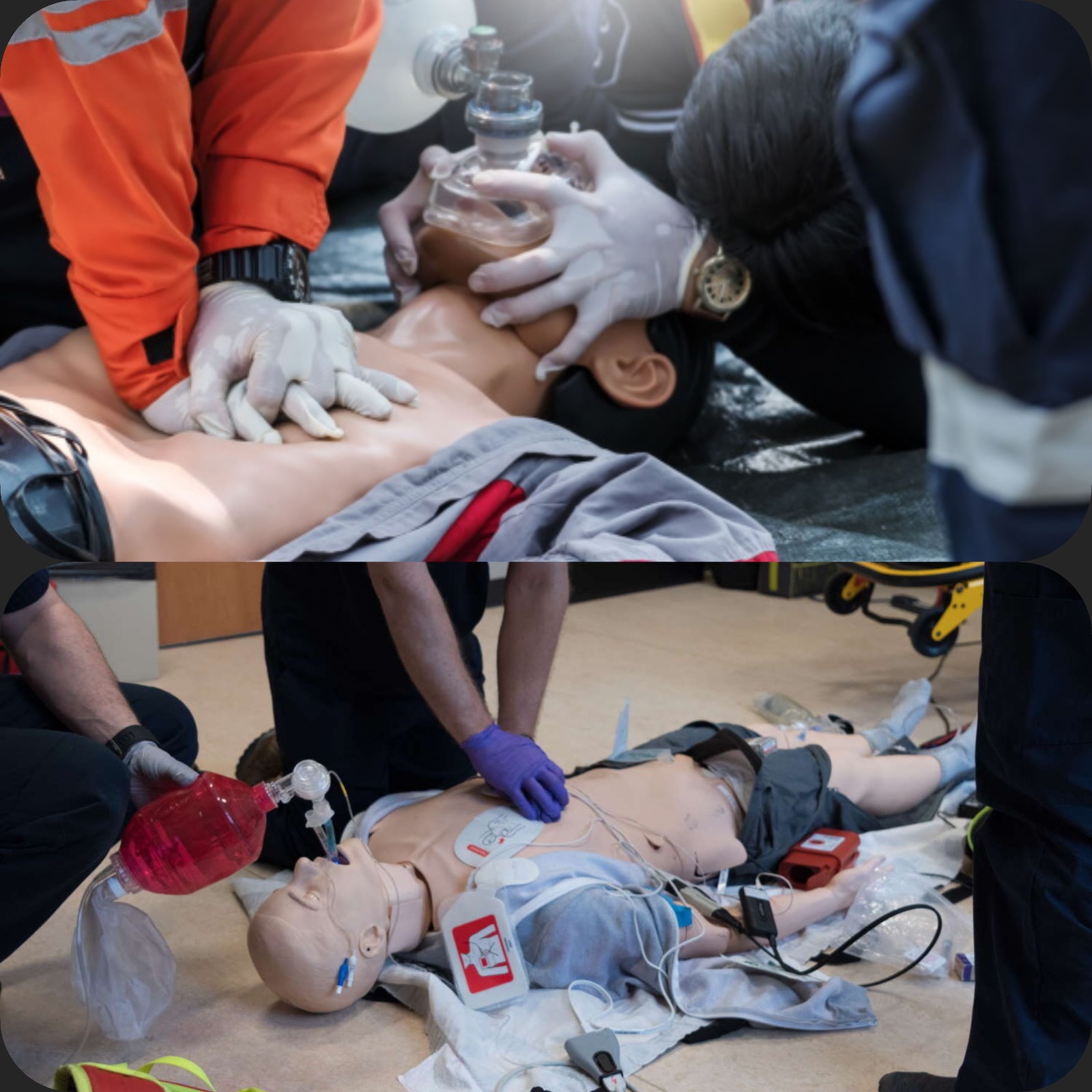
Course Outcomes
On successful completion, learners will be able to:
- Respond quickly and safely to emergency situations
- Perform effective CPR on adults, children, and infants in line with ARC guidelines
- Use an Automated External Defibrillator (AED) correctly
- Manage bystanders and maintain personal safety
- Communicate with emergency services and complete incident reporting
- Apply duty of care, legal responsibilities, and ethical considerations
Participants will develop strong situational awareness and confidence in handling life-threatening incidents.
Entry Requirements
There are no formal entry requirements.
Participants must:
- Be physically able to perform continuous CPR on the floor for at least 2 minutes
- Provide valid photo identification
- Have basic English communication skills to participate in training and assessment
Units of Competency
This course includes the following nationally recognised unit:
- HLTAID009 – Provide Cardiopulmonary Resuscitation
Delivery Options
- Duration: 3–4 hours
- Format: Face-to-face practical training with supporting theoretical components
- Location: Delivered across Queensland by qualified and accredited trainers
Training focuses on realistic, hands-on practice to develop strong CPR competency.
Future Training Options
HLTAID009 is a core unit for further first aid qualifications, including:
- HLTAID011 – Provide First Aid
- HLTAID014 – Provide Advanced First Aid
It also supports WHS compliance and ongoing professional development for security, workplace safety, and emergency response roles.
Course Fees
- Fee for Service: $100
Includes training materials, hands-on assessment, and issuance of a nationally recognised Statement of Attainment.
- Fee for Service: $100
Licensing Requirements
There are no licensing requirements attached to HLTAID009; however, CPR competency is mandatory across many industries including security, childcare, community services, construction, and health.
Certification remains current for 12 months, with annual refresher training required under ARC guidelines.